A Memphis Driver’s Guide from Snell Automotive
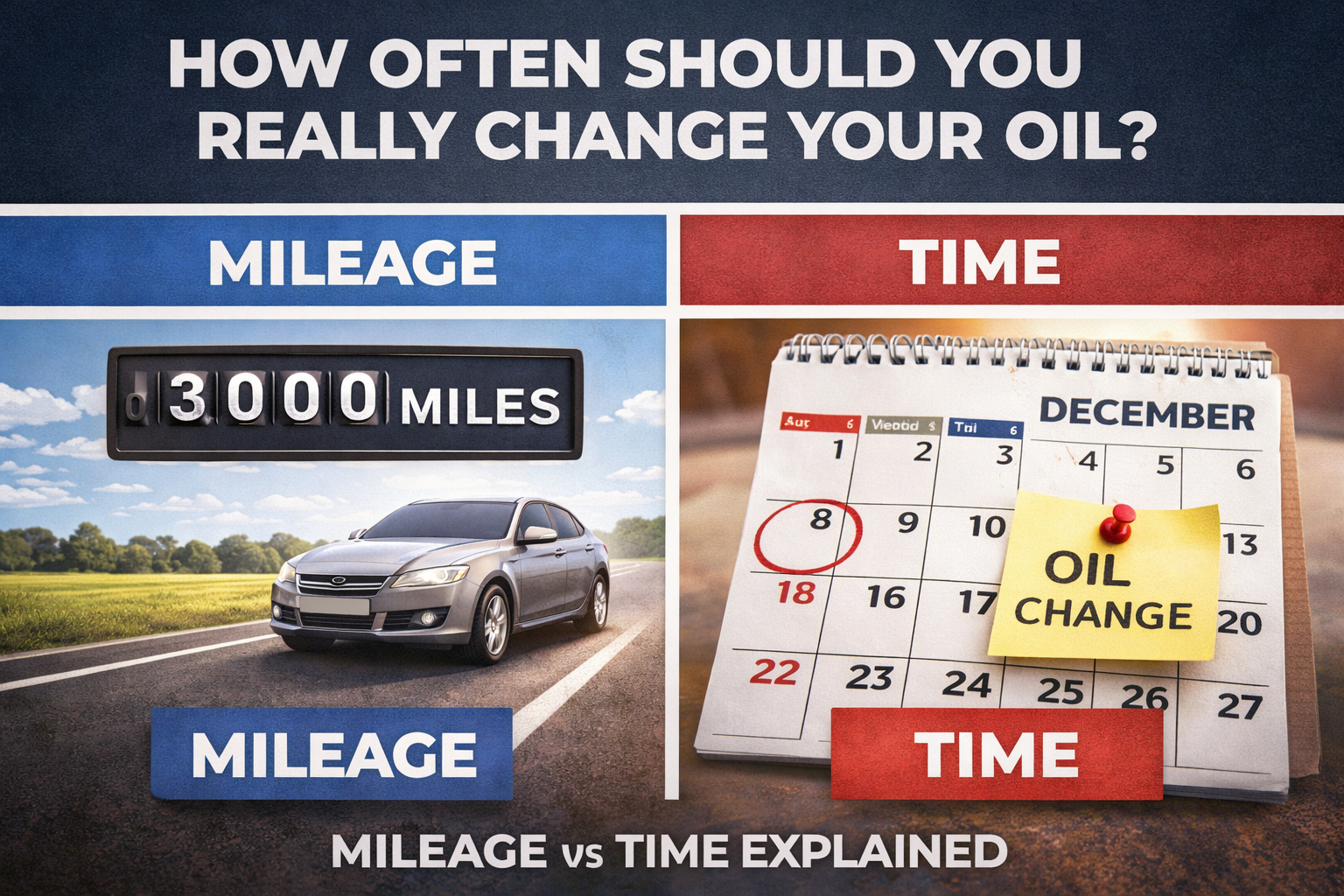
If you’ve ever wondered whether you should change your oil based on miles driven or time passed, you’re not alone. Many Memphis drivers don’t put on a lot of highway miles—but that doesn’t mean their oil is lasting longer.
Between Memphis heat, stop-and-go traffic, and short trips around town, oil often breaks down faster here than the owner’s manual suggests.
This guide explains:
- Mileage vs time oil change intervals
- Why Memphis driving conditions matter
- What happens if you wait too long
- How to set the right oil change schedule for your car
Mileage vs Time: Why There Are Two Rules
Most manufacturers list oil change intervals like:
- Every 5,000–7,500 miles, or
- Every 6–12 months
That “or” is important.
Oil doesn’t only wear out from miles—it also degrades with time, heat, and engine conditions, even if the car sits.
If you drive less than average, you may still need oil changes based on time, not mileage.
Why Memphis Driving Is Harder on Engine Oil
Oil change advice written at a national level often assumes mixed highway driving in moderate climates. That’s not Memphis.
Here’s what we see daily:
1. Memphis Heat Breaks Oil Down Faster
Once summer temperatures stay in the 90s, under-hood engine temperatures climb. Heat accelerates oil oxidation, thinning it out and reducing protection.
2. Stop-and-Go Traffic Increases Engine Stress
Traffic on Poplar, Germantown Parkway, I-240, and short in-town trips means:
- More idling
- More heat cycles
- Less time for oil to fully circulate and clean
3. Short Trips Are Tougher Than Long Drives
Many Memphis drivers:
- Drive 5–10 minutes at a time
- Shut the engine off before oil reaches full temperature
This allows moisture and fuel dilution to stay in the oil—leading to sludge over time.
So… Mileage or Time? Here’s the Practical Answer
Follow Mileage If:
- You drive mostly highway
- You rack up miles quickly
- Your trips are 20–30+ minutes at a time
Follow Time If:
- You drive infrequently
- Most trips are short
- Your car sits days at a time
- You’re under the mileage interval but it’s been 6–12 months
For many Memphis drivers, time is the limiting factor, not miles.
What Happens If You Wait Too Long Between Oil Changes?
Delaying oil changes doesn’t usually cause instant failure—it causes slow, expensive damage:
- Sludge buildup in the engine
- Increased oil consumption
- Premature timing chain wear
- Reduced fuel economy
- Costly internal engine repairs
We often see this in vehicles that “didn’t drive much” but went too long between services.
Does Synthetic Oil Change the Rules?
Synthetic oil:
- Handles heat better
- Resists breakdown longer
- Provides better protection
However, synthetic oil still degrades over time.
Even with synthetic:
- Heat
- Short trips
- Moisture contamination
…still matter. It may extend intervals, but it doesn’t eliminate time-based changes.
What About the Oil Life Monitor or Dashboard Light?
Oil life systems are helpful—but they’re algorithms, not lab tests.
They estimate oil life based on:
- Engine temperature
- Driving patterns
- RPM and load
They do not measure:
- Moisture
- Fuel dilution
- Oil quality directly
For Memphis drivers with short trips and heat exposure, these systems can sometimes be optimistic.
Signs You May Be Overdue (Even If the Light Is Off)
- Engine sounds louder than usual
- Rough idle
- Burning oil smell
- Oil looks dark and thick on the dipstick
- Reduced fuel economy
If you notice these, it’s worth checking—even if mileage seems low.
High-Mileage Vehicles Need Extra Attention
Many cars in Memphis are well past 100,000 miles. As engines age:
- Tolerances loosen
- Oil consumption increases
- Contamination builds faster
High-mileage vehicles often benefit from shorter intervals, not longer ones.
The Bottom Line for Memphis Drivers
There is no single “magic number” for oil changes.
The correct interval depends on:
- How you drive
- How often you drive
- Memphis heat and traffic
- Vehicle age and condition
At Snell Automotive, we don’t guess—we look at how you actually use your vehicle and recommend intervals that protect it long-term.
Not Sure If You’re Due?
If you’re unsure whether you’re overdue based on mileage or time, stop by Snell Automotive. We’re happy to check oil condition and help you set a realistic maintenance schedule—no pressure, no upselling.
Related Reading:
- Why Memphis Heat Breaks Down Engine Oil Faster
- Short Trips and Stop-and-Go Traffic: Why They’re Hard on Oil
- Synthetic vs Conventional Oil: What Memphis Drivers Should Choose
- Signs Your Car Is Overdue for an Oil Change
- How Often Memphis Drivers Should Change Oil After 100,000 Miles
- When Mileage Lies: Why Time-Based Oil Changes Matter