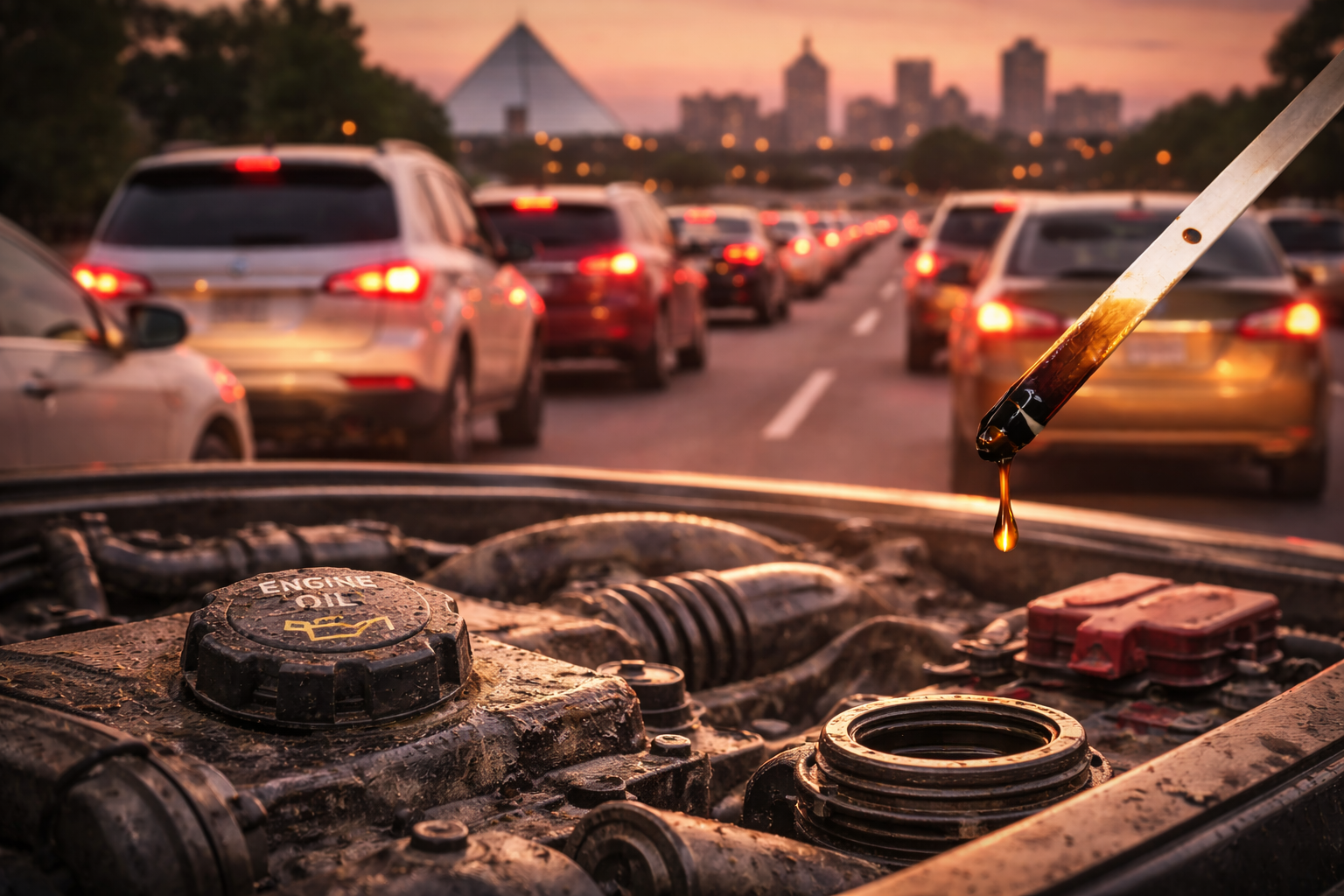
How City Driving Accelerates Oil Wear (Even With Low Mileage)
Many Memphis drivers assume their oil lasts longer because they “don’t drive that far.” In reality, short trips and stop-and-go traffic are some of the hardest conditions for engine oil—often worse than highway miles.
If most of your driving is around town, oil can break down faster even when mileage stays low.
Why Short Trips Are Tougher Than Long Drives
A short trip is typically anything under 10–15 minutes. In Memphis, that might include:
- Driving to work or school
- Running errands
- Dropping kids off
- Quick trips across town
During short trips:
- The engine never fully warms up
- Oil doesn’t reach optimal operating temperature
- Moisture and fuel contamination don’t burn off
Over time, this causes oil to degrade internally—even if it looks fine on paper.
Moisture and Fuel Dilution: The Hidden Oil Killers
When an engine is cold:
- Fuel doesn’t burn as efficiently
- Water vapor forms inside the crankcase
Normally, a fully warmed engine evaporates this moisture. But with frequent short trips:
- Moisture stays trapped in the oil
- Fuel mixes with oil, thinning it out
This leads to sludge formation and reduced lubrication—one of the most common issues we see in low-mileage vehicles.
Stop-and-Go Traffic Adds Heat Without the Benefits
Traffic around Poplar Avenue, Germantown Parkway, Summer Avenue, and I-240 creates a perfect storm for oil wear.
Stop-and-go driving means:
- Frequent idling
- Repeated heat spikes
- Limited airflow through the engine bay
Unlike highway driving, oil is constantly stressed without getting a chance to stabilize or clean itself.
Idling Is Not “Easy” on Your Engine
A common misconception is that idling doesn’t count as wear.
In reality, idling:
- Increases engine heat
- Reduces oil pressure at low RPM
- Allows contaminants to build up
If your car spends a lot of time idling in traffic or parking lots, oil degradation accelerates—even if miles don’t increase much.
Why Oil Change Lights Can Be Misleading for City Drivers
Oil life monitoring systems estimate oil condition based on driving patterns, but they:
- Cannot measure moisture or fuel dilution
- Often assume some highway driving
For Memphis drivers who mostly drive short distances, oil life monitors can overestimate remaining oil life.
This is why we often see vehicles overdue for service even though the dashboard says otherwise.
Low Mileage Does Not Mean Low Wear
Some of the most oil-damaged engines we see:
- Are driven only a few thousand miles per year
- Rarely see highway speeds
- Sit overnight between short trips
Time, moisture, and heat cycles matter just as much as miles—sometimes more.
How Memphis Drivers Should Adjust Oil Change Habits
If most of your driving is:
- In-town
- Stop-and-go
- Short trips
You should:
- Follow time-based oil changes, not just mileage
- Expect shorter intervals than highway drivers
- Pay attention to oil condition, not just warning lights
This is especially important during summer months when heat compounds the problem.
Local Insight from Snell Automotive
At Snell Automotive, we regularly service vehicles that “barely get driven” but still show oil breakdown from short trips and city traffic. Memphis driving patterns are unique, and oil change schedules should reflect that reality.
Our approach is simple: match maintenance to how the vehicle is actually used, not generic guidelines.
Related Reading
- How Often Should You Really Change Your Oil? Mileage vs Time Explained
- Why Memphis Heat Breaks Down Engine Oil Faster
- Synthetic vs Conventional Oil: What Memphis Drivers Should Choose
- Signs Your Car Is Overdue for an Oil Change
- High-Mileage Oil Change Schedules Explained
- When Mileage Lies: Why Time-Based Oil Changes Matter
Not Sure If Your Driving Habits Are Hard on Your Oil?
If you mostly drive around Memphis and aren’t sure whether your oil change interval fits your habits, stop by Snell Automotive. We’re happy to check oil condition and help you set a realistic schedule—no pressure involved.