What Memphis Drivers Should Watch for Before Damage Happens
Many drivers wait for a dashboard light to tell them it’s time for an oil change. But in real-world Memphis driving—heat, traffic, and short trips—oil often breaks down before any warning appears.
Knowing the early signs of overdue oil can help you avoid sludge buildup, engine wear, and costly repairs.
1. Your Engine Sounds Louder Than Normal
Fresh oil cushions engine components and reduces noise. As oil breaks down:
- It thins out
- Loses its protective film
- Allows more metal-on-metal contact
If your engine sounds louder, rougher, or more “tappy” than usual—especially at idle—that’s often an early warning sign.
2. Rough Idle or Shaking at Stoplights
In Memphis traffic, engines spend a lot of time idling. Old oil struggles to:
- Maintain consistent lubrication at low RPM
- Keep internal parts clean
A rough idle at red lights or in drive-thrus can indicate oil that’s no longer doing its job.
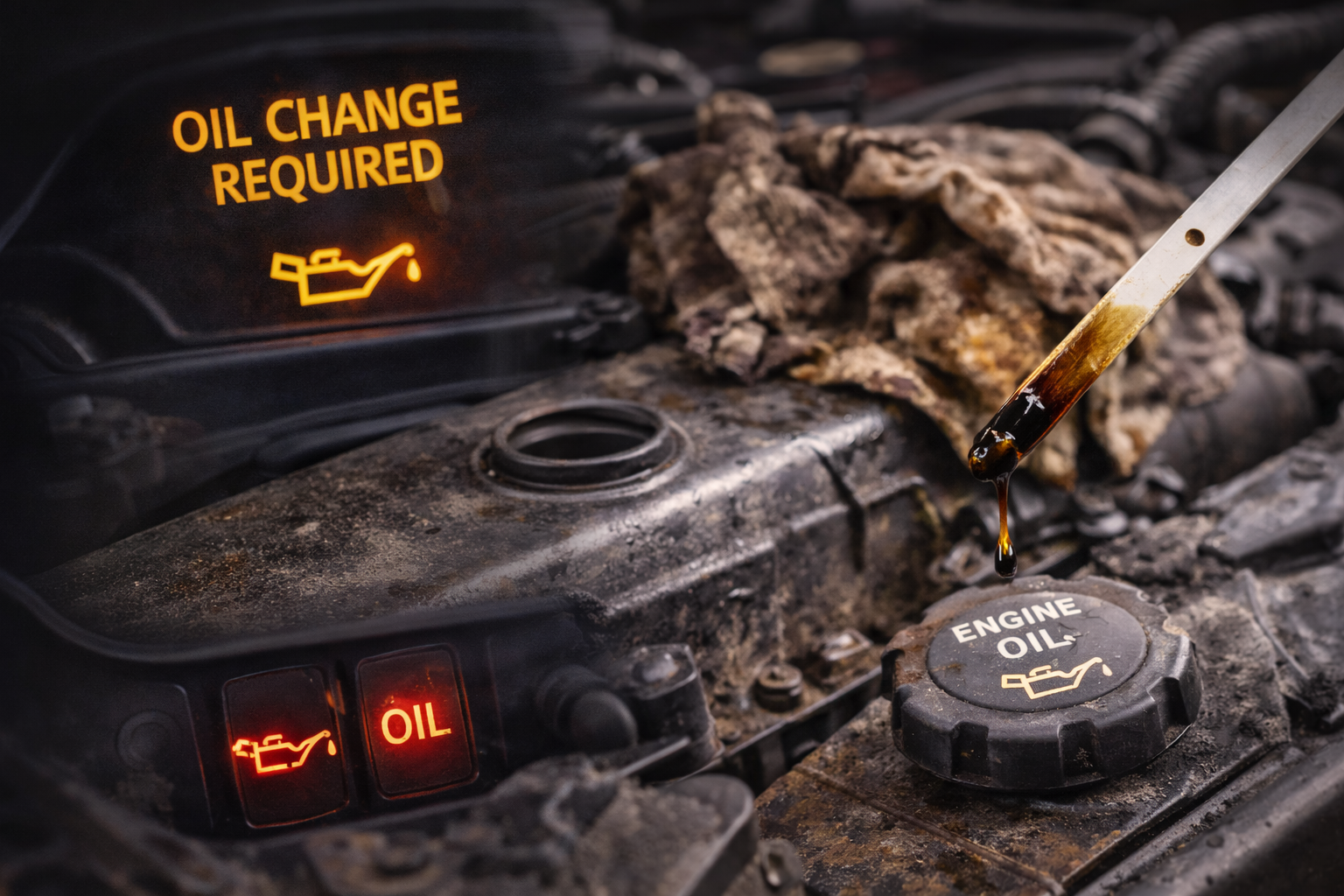
3. Dark, Thick, or Dirty Oil on the Dipstick
Oil naturally darkens over time, but overdue oil may appear:
- Thick or sludgy
- Gritty
- Extremely dark and opaque
If oil doesn’t flow easily on the dipstick, it’s likely overdue—regardless of mileage.
4. Burning Oil Smell After Driving
A noticeable oil smell—especially after short trips or sitting in traffic—can mean:
- Oil is breaking down from heat
- Oil vapors are burning off engine components
- Oil levels are too low due to consumption
This is common during Memphis summers when under-hood temperatures spike.
5. Reduced Fuel Economy
As oil degrades:
- Internal friction increases
- The engine works harder
- Efficiency drops
If your fuel economy suddenly worsens without a clear reason, overdue oil may be contributing.
6. Oil Change or Maintenance Light Comes On
This one seems obvious—but many drivers delay service even after the light appears.
Important to know:
- Oil life monitors estimate, they don’t measure
- They may not fully account for short trips or heat
- By the time the light turns on, oil may already be marginal
In Memphis driving conditions, the light should be treated as a final reminder, not the first signal.
7. Your Car “Doesn’t Drive Much” (But Time Has Passed)
This is one of the most common situations we see.
If:
- You drive infrequently
- Most trips are short
- Months pass without hitting mileage intervals
Oil can still degrade due to time, moisture, and fuel dilution. Low mileage does not equal low wear.
8. High-Mileage Vehicles Show Symptoms Sooner
Vehicles over 100,000 miles are more sensitive to oil condition. Overdue oil can lead to:
- Increased oil consumption
- Sludge buildup
- Accelerated timing component wear
High-mileage engines often benefit from shorter oil change intervals, not longer ones.
Why These Signs Appear Faster in Memphis
Memphis driving creates a perfect storm:
- Prolonged summer heat
- Stop-and-go traffic
- Constant A/C use
- Short, in-town trips
All of these accelerate oil breakdown, making overdue oil symptoms appear sooner than in cooler or highway-heavy regions.
Local Insight from Snell Automotive
At Snell Automotive, many of the vehicles we service with oil-related issues weren’t neglected—they were driven lightly and followed mileage guidelines, but time and Memphis conditions weren’t factored in.
That’s why we focus on how you actually drive, not just what the manual says.
What to Do If You Notice These Signs
If you notice one or more of these symptoms:
- Don’t wait for the next interval
- Check oil condition
- Adjust your schedule if needed
Early oil changes are inexpensive. Engine repairs are not.
Related Reading
- How Often Should You Really Change Your Oil? (Mileage vs Time Explained)
- Why Memphis Heat Breaks Down Engine Oil Faster
- Short Trips and Stop-and-Go Traffic: Why They’re Hard on Oil
- Synthetic vs Conventional Oil: What Memphis Drivers Should Choose
- High-Mileage Oil Change Schedules Explained
- When Mileage Lies: Why Time-Based Oil Changes Matter
Not Sure If You’re Overdue?
If you’re unsure whether your oil is still protecting your engine, stop by Snell Automotive for an honest check. We’ll look at oil condition and help you set a schedule that fits Memphis driving realities—no pressure involved.