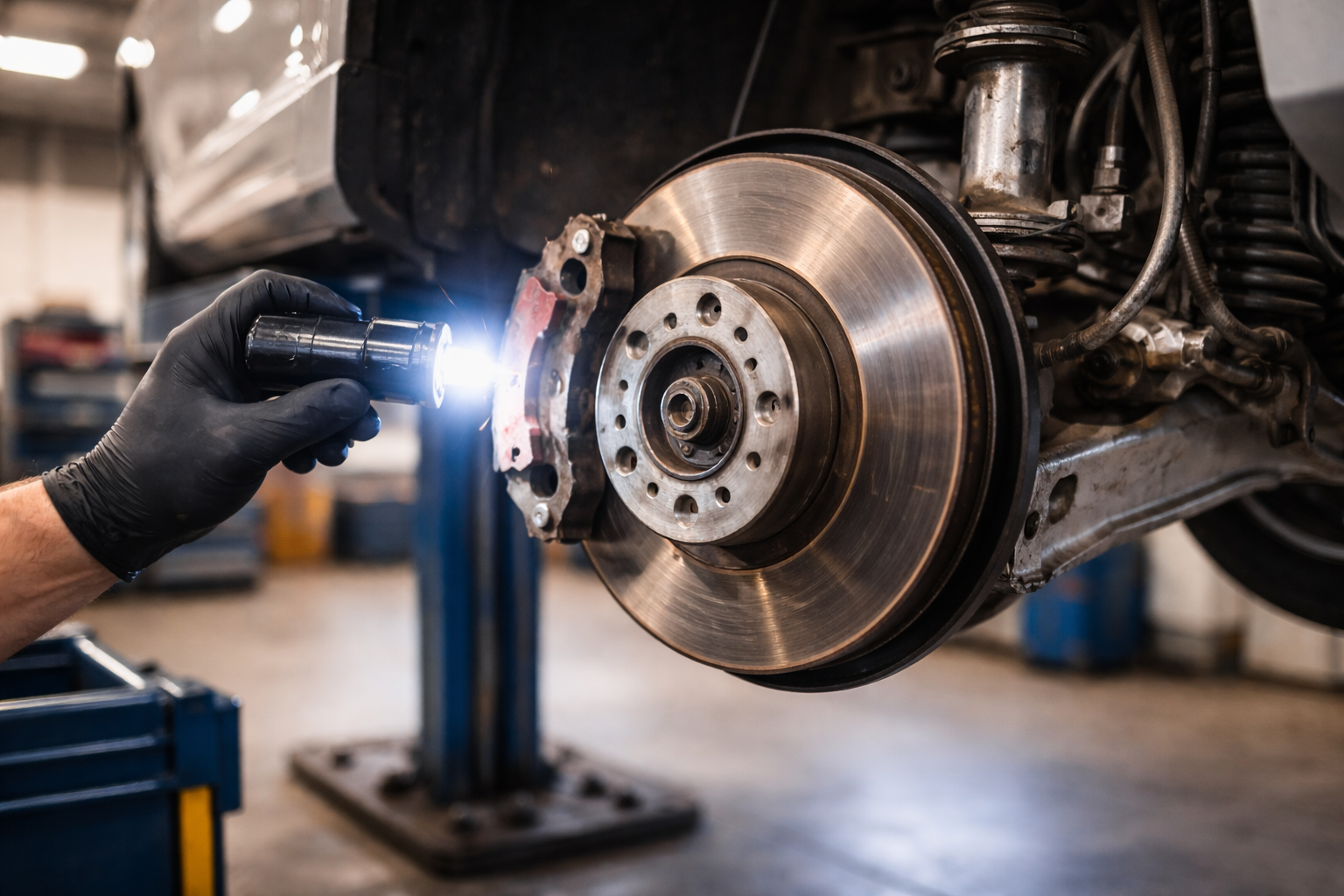
Brake noises and vibrations are some of the clearest warning signs your vehicle gives you. While not every sound means immediate danger, persistent squeaking, grinding, or vibration almost always indicates wear or damage within the braking system. Understanding what each symptom means can help you act before safety or repair costs become an issue.
What Squeaking Brakes Usually Mean
Squeaking is often an early warning, not an emergency. Common causes include:
- Brake pads nearing the end of their life
- Wear indicator tabs contacting the rotor
- Brake dust buildup
- Light glazing from heat or stop-and-go driving
Occasional squeaks—especially in cold or damp conditions—can be normal. Continuous squeaking, however, means the brakes should be inspected soon.
What Grinding Brakes Mean (Urgent)
Grinding is a sign that braking material is already gone. This usually means:
- Brake pads are worn completely through
- Metal backing plates are contacting the rotor
- Rotor damage is actively occurring
Even short-term driving with grinding brakes can significantly increase repair costs and reduce stopping ability.
What Vibrating or Pulsing Brakes Mean
Vibration felt in the brake pedal or steering wheel often points to:
- Warped or uneven rotors
- Uneven pad material transfer
- Suspension or steering components affecting braking stability
Brake vibration reduces control and confidence, especially during sudden stops, and should not be ignored.
Why These Symptoms Often Appear Together
Braking systems don’t wear in isolation. When one component wears unevenly, it can cause:
- Noise from pad-to-rotor contact
- Vibration from uneven surfaces
- Accelerated wear of surrounding components
That’s why addressing brake issues early prevents multiple problems from developing at once.
Why Memphis Driving Accelerates Brake Wear
Local driving conditions contribute to faster brake wear:
- Stop-and-go traffic
- Short trips that prevent full heat cycling
- Rough or uneven roads
- Heat that increases friction and material breakdown
These factors make regular brake inspections especially important.
When to Have Your Brakes Checked
Schedule an inspection if you notice:
- Persistent squeaking
- Any grinding noise
- Pulsing or shaking when braking
- Changes in braking feel or response
Waiting rarely improves the problem—and often makes it more expensive.
How Brake Inspections Are Performed at Snell Automotive
At Snell Automotive, brake inspections include:
- Pad and rotor condition
- Caliper operation
- Brake hardware and mounting points
- Brake fluid condition
- Related suspension components
This full-system approach ensures the real cause of noise or vibration is identified—not just the most obvious symptom.