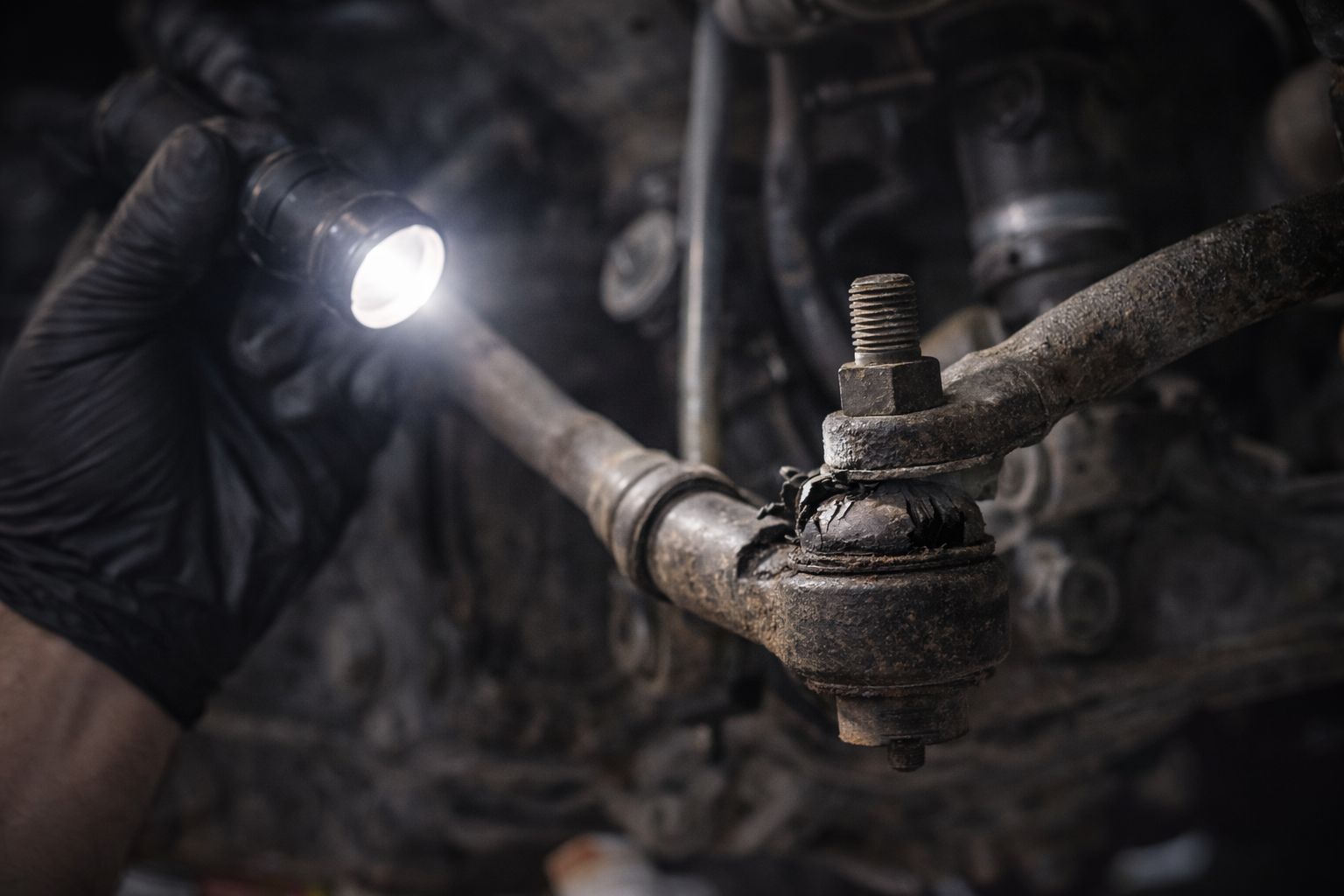
If your steering feels loose, vague, or makes clunking noises over bumps, worn steering components are often the cause. Tie rods and ball joints play a critical role in keeping your vehicle stable and responsive. When they wear, control and safety can be compromised—sometimes suddenly.
What Tie Rods and Ball Joints Do
- Tie rods connect the steering system to the wheels, allowing you to turn the vehicle.
- Ball joints act as pivot points between the suspension and steering components, allowing controlled movement.
Both components are designed to move smoothly while supporting vehicle weight and steering forces.
Common Symptoms of Tie Rod or Ball Joint Wear
Worn steering components often produce noticeable warning signs:
- Loose or wandering steering
- Clunking or knocking noises, especially over bumps
- Steering wheel vibration
- Uneven tire wear
- Poor alignment that won’t stay corrected
These symptoms usually worsen gradually, which makes them easy to overlook.
Why Clunking Noises Matter
Clunking noises often occur when worn components shift under load. This can happen:
- During turns
- When braking
- Over potholes or uneven roads
Ignoring these noises can allow excessive movement that accelerates wear on other suspension parts.
Safety Risks of Worn Steering Components
Driving with worn tie rods or ball joints can lead to:
- Reduced steering precision
- Increased stopping distance
- Rapid tire wear
- Sudden component failure in extreme cases
Because these parts directly affect control, steering issues should be addressed promptly.
Why These Problems Are Common in Memphis
Local conditions contribute to faster wear:
- Rough road surfaces and potholes
- Stop-and-go traffic
- Heat that accelerates rubber and joint deterioration
- High-mileage daily driving
Regular inspections help catch wear before it becomes a safety concern.
How Tie Rod and Ball Joint Issues Are Diagnosed
At Snell Automotive, inspections focus on:
- Steering play and component movement
- Joint wear and looseness
- Tire wear patterns
- Alignment-related issues
This ensures worn parts are identified accurately—not guessed.
When to Schedule an Inspection
Have your steering checked if:
- The vehicle feels unstable or difficult to control
- Clunking noises are persistent
- Tires are wearing unevenly
- Steering response feels delayed
Steering issues rarely resolve on their own and often worsen over time.