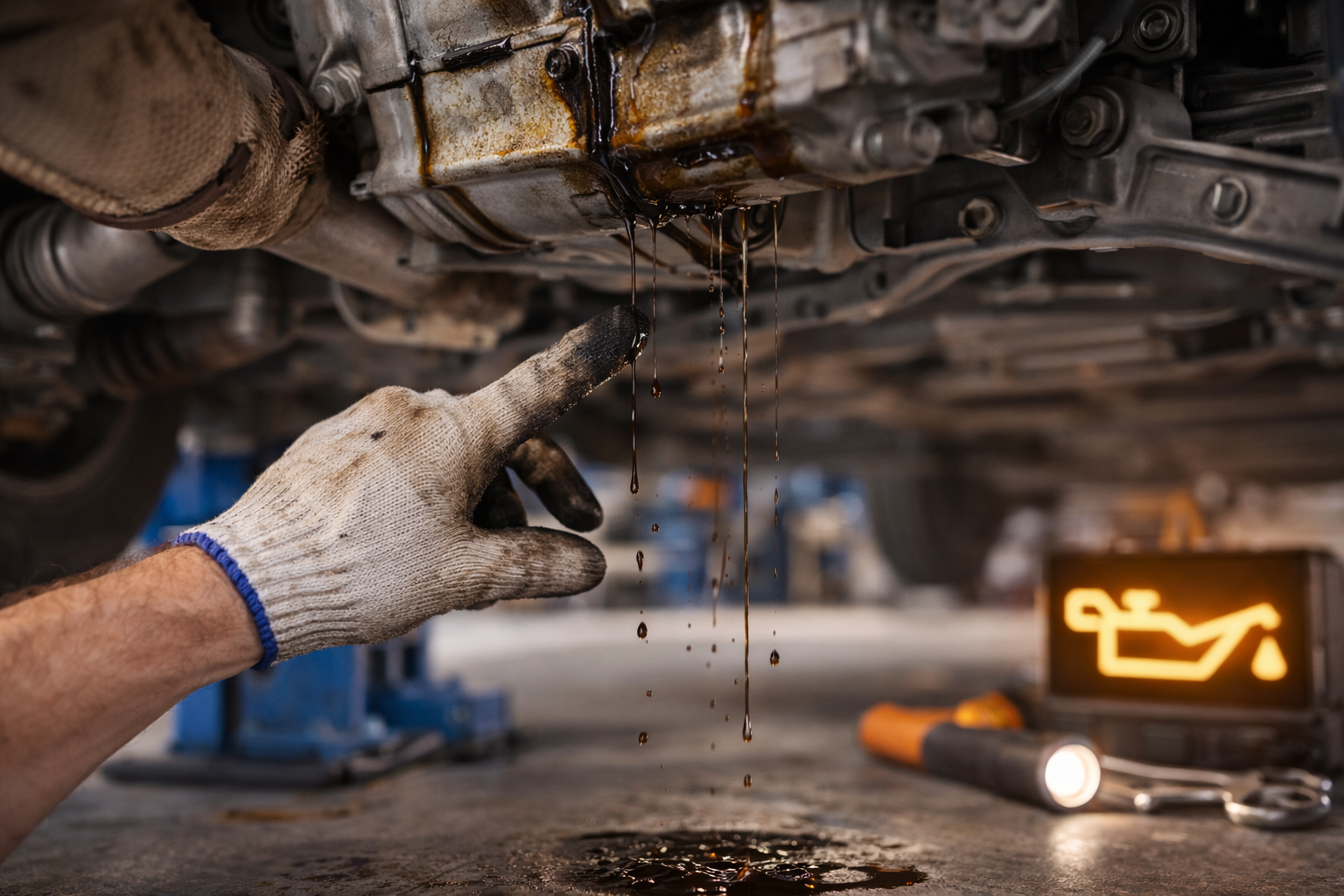
Seeing oil under your vehicle or noticing a burning oil smell can be concerning. Oil leaks range from minor seepage to problems that can quickly damage the engine if ignored. Knowing the difference helps you decide when to monitor an issue and when to schedule a repair.
At Snell Automotive, oil leak inspections focus on identifying the source, severity, and risk—not just stopping the drip.
Why Engines Develop Oil Leaks
Engine oil circulates under pressure and high heat. Over time, seals and gaskets naturally wear. Common contributing factors include:
- Heat cycles that harden rubber seals
- Age and mileage
- Crankcase pressure buildup
- Poor sealing surfaces
Leaks often start small and worsen gradually, which is why early inspection matters.
What Oil Leaks Are Often Considered “Minor”
Some oil seepage may not require immediate repair, especially if:
- Oil loss is very slow
- No oil reaches hot engine components
- Oil levels remain stable between services
Examples include light valve cover seepage or minor gasket weeping. These situations are often monitored rather than urgently repaired.
Oil Leaks That Should Not Be Ignored
Certain leaks can cause engine damage or safety issues and should be addressed promptly:
- Oil dripping onto exhaust components (burning smell or smoke)
- Rapid oil loss requiring frequent top-offs
- Leaks near critical seals or pressurized areas
- Oil warning lights or low oil pressure
Ignoring these leaks increases the risk of overheating, lubrication failure, and internal engine wear.
Common Sources of Engine Oil Leaks
Oil leaks often originate from:
- Valve cover gaskets
- Oil pan gaskets
- Front or rear crankshaft seals
- Oil filter housing or cooler seals
- Camshaft or timing cover seals
Proper diagnosis is needed to confirm the source, as oil can travel and appear far from where it started.
Why Oil Leaks Can Affect More Than Just Oil Level
Oil leaks don’t only reduce lubrication. They can also:
- Damage rubber hoses and belts
- Attract dirt and debris
- Cause unpleasant odors inside the cabin
- Lead to engine misfires if oil reaches ignition components
Addressing leaks early helps protect surrounding systems.
How Oil Leak Inspections Are Performed
A professional oil leak inspection typically includes:
- Cleaning affected areas
- Identifying leak origin
- Checking oil pressure and crankcase ventilation
- Evaluating repair options based on severity
This approach avoids unnecessary resealing while addressing leaks that pose real risk.
When to Schedule an Oil Leak Inspection
You should have a leak checked if:
- Oil spots appear regularly under the vehicle
- You smell burning oil
- Oil levels drop between oil changes
- Warning lights appear
Early evaluation often reduces repair cost and prevents secondary damage.
Oil Leaks and Memphis Driving Conditions
Heat, stop-and-go traffic, and high-mileage driving common in the Memphis area accelerate seal wear. Vehicles driven daily or used for long trips are especially prone to developing oil leaks over time.