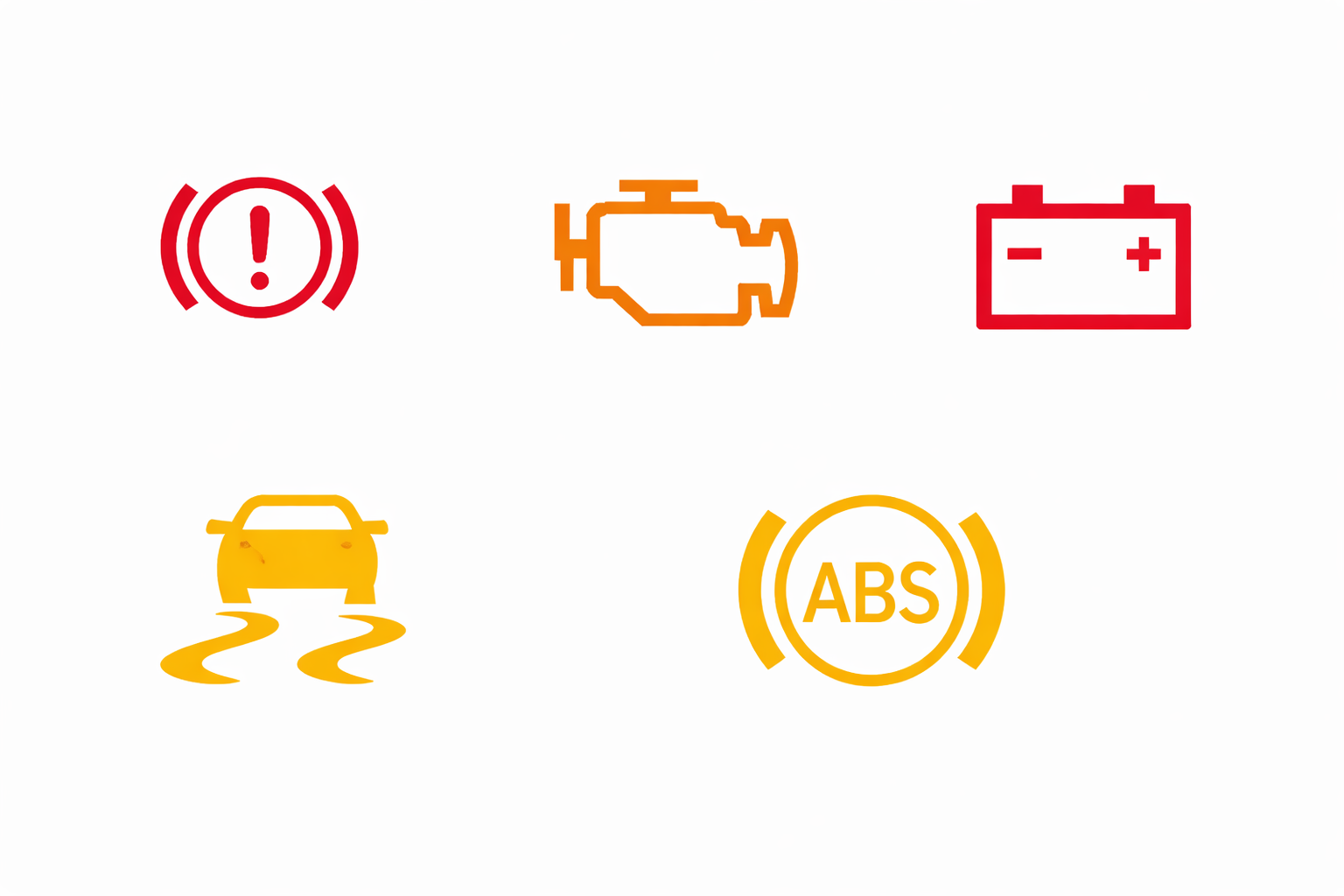
Modern vehicles use dashboard warning lights to alert drivers when a system detects abnormal data. While some lights signal urgent issues, others indicate that a safety or stability feature may be temporarily disabled. Understanding what these lights usually mean helps you decide when to keep driving and when to schedule an inspection.
At Snell Automotive, warning light diagnostics focus on identifying the affected system and determining whether the issue is electrical, sensor-related, or mechanical.
Why Multiple Warning Lights Can Appear at Once
Many vehicle systems share sensors and data. A single fault—such as a wheel speed sensor or voltage issue—can trigger multiple warning lights simultaneously. This is why guessing based on the light alone often leads to unnecessary repairs. Diagnostics are required to confirm the actual cause.
ABS Warning Light: What It Usually Means
The ABS (Anti-lock Braking System) light indicates a problem within the anti-lock braking system. When this light is on:
- Standard braking usually still works
- Anti-lock braking may be disabled
- Braking performance in emergency stops may be reduced
Common causes include wheel speed sensor issues, wiring faults, or control module communication problems.
Traction Control Light Explained
The traction control system helps prevent wheel spin during acceleration. A traction control light may appear:
- When the system is actively limiting wheel spin
- When the system is disabled due to a fault
If the light stays on continuously, the system may not function properly, especially on wet or slippery roads.
Stability Control Warning Light
Stability control helps keep the vehicle stable during cornering and sudden maneuvers. A warning light often indicates:
- Sensor data inconsistencies
- Communication issues between systems
- ABS-related faults
Because stability control relies on ABS components, problems in one system often affect the other.
Brake Warning Light vs ABS Light
These two lights are often confused but indicate different concerns:
- Brake warning light may signal low brake fluid or a hydraulic issue
- ABS light indicates an issue with anti-lock braking functionality
Both should be inspected, but the brake warning light may indicate a more immediate safety concern.
Why Warning Lights Sometimes Turn On and Off
Intermittent warning lights are common with electrical or sensor issues. Factors such as temperature, vibration, or moisture can affect signals, causing lights to appear sporadically. These problems rarely resolve on their own and typically become more frequent over time.
Why Ignoring Warning Lights Isn’t a Good Idea
Even if the vehicle feels normal, warning lights indicate reduced system functionality. Ignoring them can:
- Compromise safety features
- Mask developing electrical issues
- Lead to more expensive repairs later
Early diagnostics help prevent small faults from escalating.
How Warning Light Diagnostics Work
Proper diagnostics may include:
- Retrieving system-specific fault codes
- Testing sensors and circuits
- Verifying communication between control modules
- Road testing to confirm findings
This process ensures repairs are targeted and effective.
When to Schedule a Warning Light Inspection
You should have warning lights checked if:
- The light stays on continuously
- Multiple lights appear at once
- Lights return after clearing
- Braking or handling feels different
- You’re planning long-distance travel