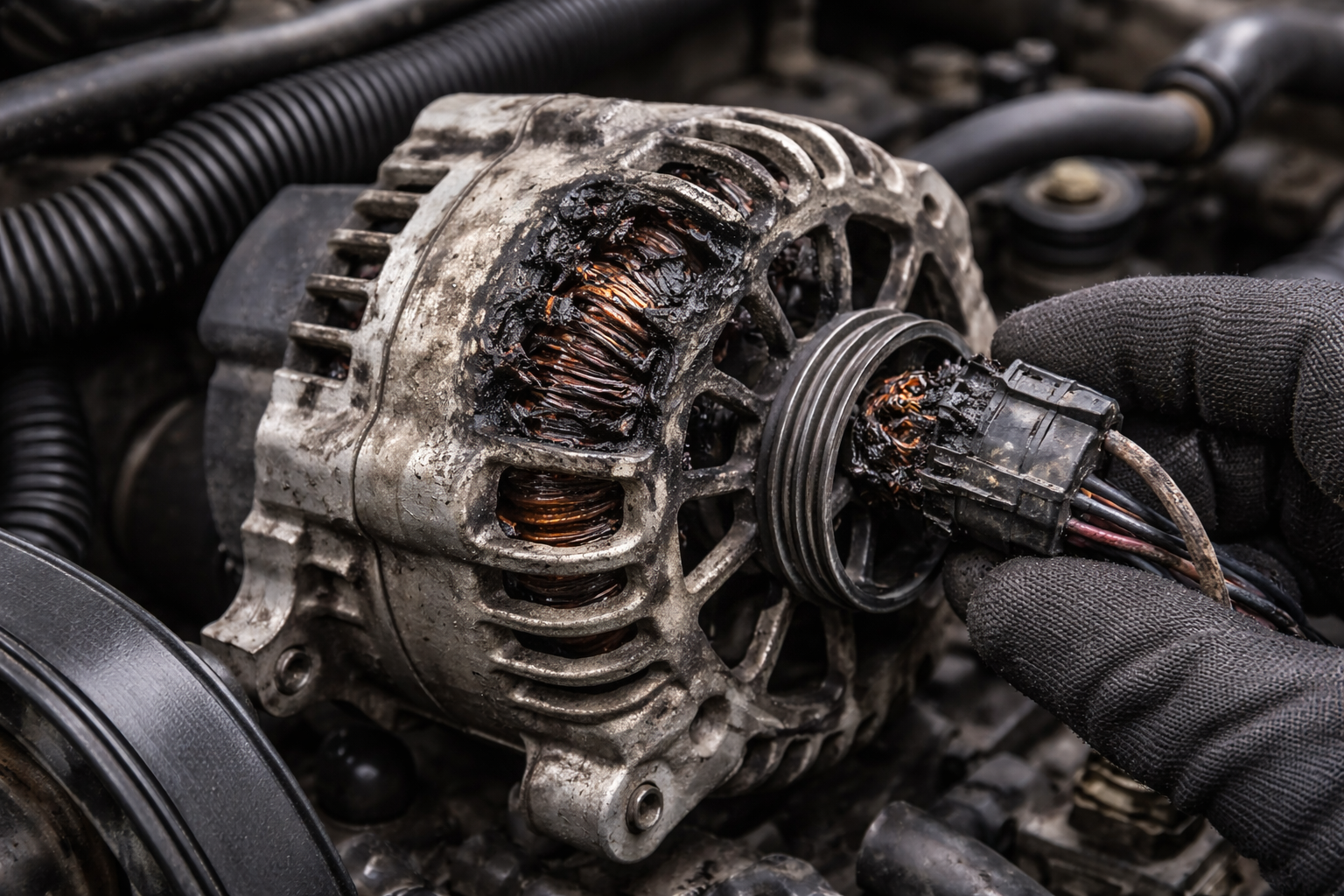
When a vehicle won’t start or keeps losing power, it’s easy to assume the battery is the problem. In reality, starting and charging issues often involve the battery, alternator, or starter—and the symptoms can overlap. Understanding the differences can help you avoid unnecessary part replacement and get the right repair sooner.
At Snell Automotive, starting and charging diagnostics focus on testing each component under real conditions to identify what’s actually failing.
Signs the Battery Is the Problem
A weak or failing battery is one of the most common causes of no-start issues. Battery-related symptoms often include:
- Slow or weak cranking
- Clicking sounds when turning the key
- Electrical systems dimming when starting
- A battery that dies after sitting overnight
Batteries naturally wear out over time, but repeated failure may point to another issue affecting battery health.
Signs the Alternator Is Failing
The alternator keeps the battery charged while the engine is running. When it fails, the vehicle may start but won’t stay powered for long. Common alternator symptoms include:
- Battery warning light on the dashboard
- Dimming headlights while driving
- Electrical systems shutting down gradually
- A vehicle that stalls after starting
An alternator issue often causes repeated battery failures if not addressed.
Signs the Starter Is the Problem
The starter is responsible for turning the engine over. When it fails, electrical systems may appear normal, but the engine won’t crank. Starter-related symptoms often include:
- A single click or no sound when starting
- Intermittent no-start conditions
- The engine failing to turn despite a charged battery
Starter problems are often mistaken for battery issues due to similar symptoms.
Why Symptoms Overlap
These three components work together. A failing alternator can weaken a battery, and a weak battery can strain the starter. This overlap makes it difficult to identify the problem without testing—especially in modern vehicles with complex electrical systems.
Why Guessing Leads to Repeat Repairs
Replacing parts based on symptoms alone can:
- Increase repair costs
- Fail to resolve the problem
- Mask the real cause
For example, replacing a battery without addressing a charging issue often results in another dead battery within weeks or months.
How Starting and Charging Diagnostics Work
Proper diagnostics typically include:
- Battery load and health testing
- Alternator output and charging verification
- Starter draw and engagement testing
- Inspection of cables, grounds, and connections
Testing confirms which component is failing and whether other systems have been affected.
Memphis Driving Conditions and Electrical Wear
Heat, stop-and-go traffic, and daily driving common in the Memphis area accelerate wear on batteries, charging systems, and electrical connections. Vehicles driven short distances or frequently idled are especially prone to starting and charging issues.
When to Schedule a Diagnostic Inspection
You should have your vehicle inspected if:
- Starting issues are intermittent
- The battery keeps failing
- Warning lights appear
- Electrical systems behave unpredictably
- You’re preparing for long-distance travel
Early testing helps prevent breakdowns and unnecessary part replacement.