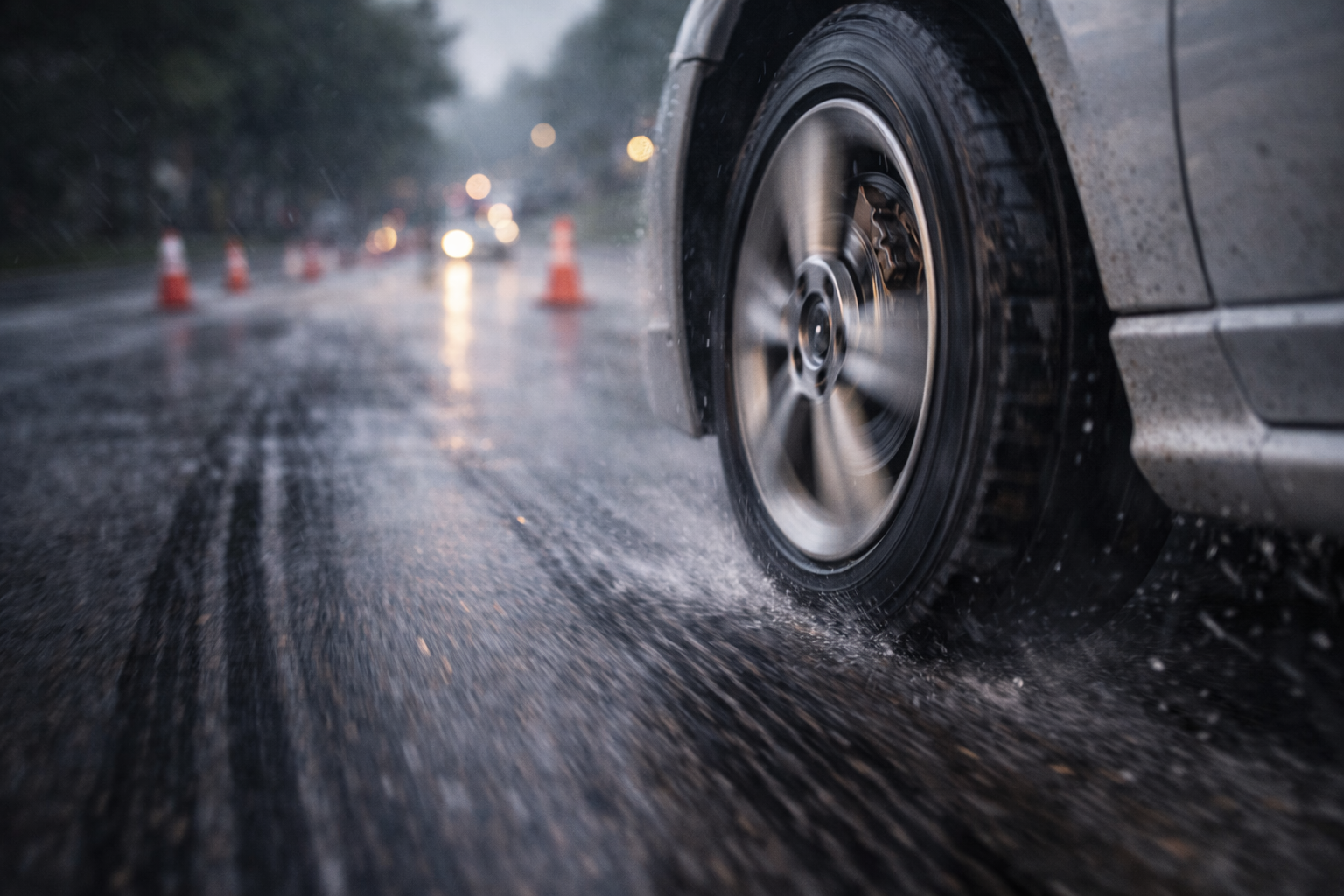
Most drivers assume stopping distance is controlled by brakes alone. In reality, braking performance depends just as much on suspension and steering components keeping the tires firmly planted on the road. When any part of this system wears out, stopping distance increases—sometimes dramatically.
Why Brakes Don’t Work Alone
Brakes create friction, but tires stop the vehicle. For that to happen:
- Suspension must control weight transfer
- Tires must maintain consistent road contact
- Steering components must keep wheels aligned
If suspension parts are worn, even new brakes can struggle to stop the vehicle efficiently.
How Worn Suspension Increases Stopping Distance
Worn shocks, struts, and bushings allow excessive movement during braking. This can cause:
- Front-end dive, reducing rear tire traction
- Wheel hop or bouncing, limiting tire contact
- Uneven braking force side to side
When tires lose contact with the road—even briefly—stopping distance increases.
Brake Wear That Contributes to Longer Stops
Brake-related issues that reduce stopping efficiency include:
- Worn or glazed brake pads
- Warped or uneven rotors
- Sticking brake calipers
- Contaminated brake components
These issues often develop gradually, making them easy to overlook until stopping performance noticeably declines.
Why These Problems Often Occur Together
Suspension and brake wear frequently overlap:
- Worn suspension causes uneven brake wear
- Brake vibration can accelerate suspension fatigue
- Uneven tire wear affects braking stability
Addressing only one system often leaves performance compromised.
Real-World Safety Implications
Increased stopping distance means:
- Less time to react in emergencies
- Greater risk in wet or uneven road conditions
- Reduced vehicle control during panic braking
Even a few extra feet can make a critical difference.
Why Memphis Driving Makes This Worse
Local conditions accelerate wear:
- Stop-and-go traffic
- Rough road surfaces
- Heat that breaks down components faster
- High-mileage daily driving
These factors make routine inspections especially important for safety.
How Stopping Distance Issues Are Diagnosed
At Snell Automotive, diagnosing braking performance involves checking:
- Brake pad and rotor condition
- Suspension and steering components
- Tire wear and alignment
- Overall vehicle stability
This system-wide approach ensures stopping issues are fully addressed.
When to Schedule an Inspection
Have your vehicle inspected if:
- Stopping distance feels longer than normal
- The vehicle dives or feels unstable under braking
- Braking feels inconsistent or unpredictable
- Suspension or steering symptoms are present
Early inspection helps restore braking performance and prevent costly repairs.