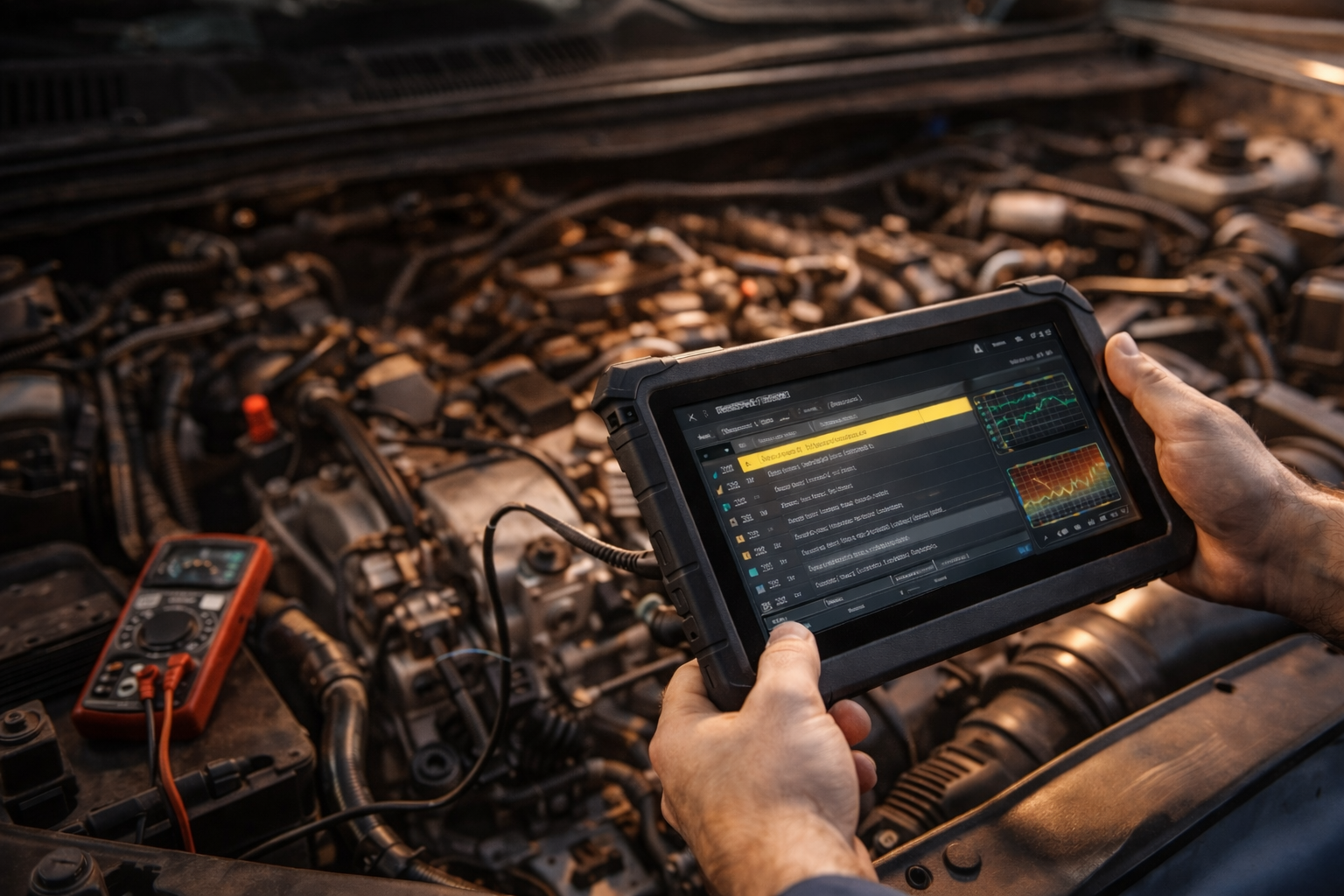
Modern vehicles rely on complex electrical systems to control everything from engine performance and braking to climate control and safety features. When an electrical issue develops, the symptoms can be confusing—random warning lights, intermittent failures, or systems that work one day and not the next. Understanding how these systems fail and why proper diagnostics matter helps drivers avoid unnecessary repairs and downtime.
At Snell Automotive, electrical diagnostics are focused on finding the root cause of a problem, not guessing or replacing parts without confirmation.
Common Warning Signs of Electrical Problems
Electrical issues don’t always cause a breakdown. More often, they show up as subtle or inconsistent symptoms, such as:
- Dashboard warning lights appearing or staying on
- Flickering interior or exterior lights
- Intermittent no-start or slow cranking
- Systems that stop working and then resume
- Reduced fuel efficiency or drivability changes
Because modern vehicles compensate electronically, these signs are often early warnings rather than immediate failures.
Why Electrical Problems Are Hard to Diagnose
Unlike mechanical failures, electrical issues can be intermittent and affected by temperature, vibration, or driving conditions. A loose connection or failing sensor may only trigger a fault occasionally, making the problem difficult to reproduce without proper testing.
Replacing parts based on symptoms alone often leads to repeat visits and higher costs. Diagnostics allow technicians to verify what’s failing—and why—before repairs begin.
Common Causes of Electrical System Failures
Most electrical issues fall into a few categories:
- Battery and charging system issues Weak batteries, failing alternators, or poor connections can cause widespread electrical symptoms.
- Sensor and module failures Modern vehicles rely on dozens of sensors and control modules. A single faulty input can trigger multiple warning lights or drivability issues.
- Wiring and connection problems Corrosion, heat damage, or vibration can affect wiring over time, especially in high-mileage vehicles.
- Software or communication faults Vehicles communicate across multiple systems. When data doesn’t flow correctly, warning lights and system malfunctions occur.
Dashboard Warning Lights Are Not Guesswork
Warning lights like the check engine light, ABS, traction control, or stability control don’t identify a specific failed part—they indicate a system has detected abnormal data. One light can have dozens of possible causes, which is why scanning codes alone is only the first step.
Proper diagnostics involve testing systems, reviewing live data, and confirming whether a fault is electrical, mechanical, or software-related.
Why Electrical Issues Often Worsen Over Time
Electrical problems rarely fix themselves. Loose connections, failing sensors, and weak batteries typically become more frequent and disruptive. What starts as an occasional warning light can turn into no-start conditions, reduced safety system performance, or unexpected breakdowns.
Early inspection often prevents minor issues from escalating into larger repairs.
How Professional Electrical Diagnostics Work
A professional diagnostic process may include:
- Retrieving fault codes and system data
- Testing electrical circuits and components
- Verifying sensor readings and communication
- Evaluating battery and charging performance
- Confirming findings through road testing
This approach ensures repairs are based on evidence—not assumptions.
Independent Shop vs Dealership Diagnostics
Many drivers assume electrical issues require dealership service. In reality, modern independent shops use advanced diagnostic equipment and stay current with evolving vehicle technology. Independent diagnostics often provide:
- More flexibility in repair options
- Clear explanations without pressure
- Cost-effective solutions for vehicles outside warranty
A good independent shop will also advise when dealership service is the better option.
When to Schedule Electrical Diagnostics
You should have your vehicle inspected if:
- Warning lights remain on or reappear
- Electrical problems are intermittent
- The vehicle struggles to start or charge
- Systems stop working unexpectedly
- You’re preparing for long-distance travel
Addressing electrical issues early helps restore reliability and avoid unnecessary part replacement.