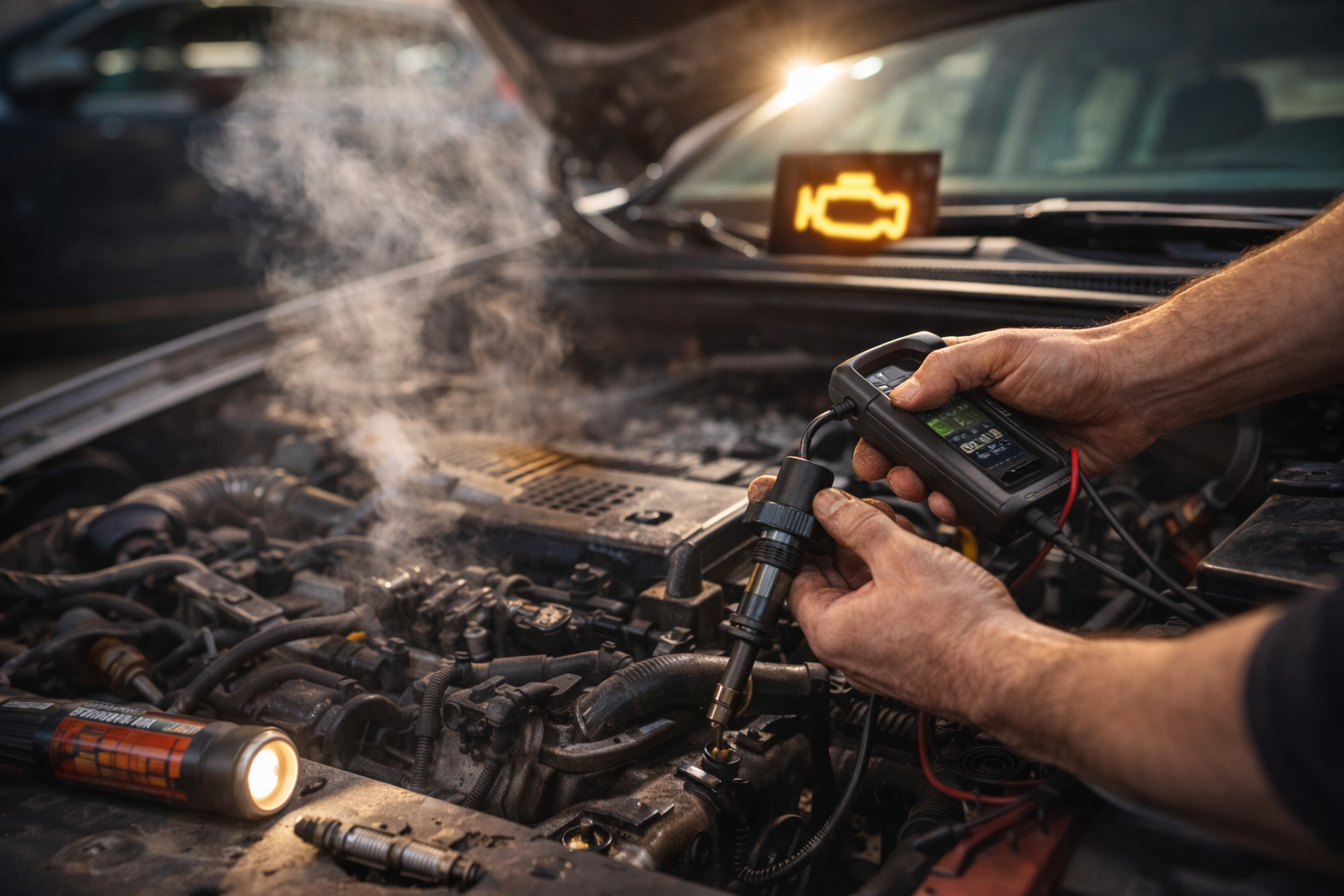
When your vehicle hesitates, shakes at idle, or feels weaker than normal, it’s often your engine signaling that something isn’t operating correctly. These symptoms—loss of power, rough idle, or misfires—can range from minor issues to problems that worsen quickly if ignored. Understanding what they mean helps you decide when to schedule an inspection.
At Snell Automotive, drivability diagnostics focus on identifying whether the issue is mechanical, electrical, or fuel-related—so repairs address the real cause, not just the symptom.
What These Symptoms Usually Feel Like
Drivers commonly describe:
- Shaking or vibration when stopped
- Hesitation when accelerating
- Sudden loss of power under load
- Engine stumbling or jerking
- Reduced fuel efficiency
These signs often become more noticeable during stop-and-go traffic, highway merging, or when the engine is cold.
What Causes Rough Idle and Misfires?
Most drivability issues stem from one of three areas:
Ignition Problems
- Worn spark plugs
- Failing ignition coils
- Weak or inconsistent spark
Fuel Delivery Issues
- Clogged or failing fuel injectors
- Fuel pressure problems
- Contaminated fuel
Air and Engine Management Issues
- Vacuum leaks
- Faulty sensors (MAF, oxygen, crankshaft)
- Throttle body or airflow restrictions
Modern engines rely on precise balance between air, fuel, and spark. When one element is off, performance suffers.
Why the Car May Still Be Drivable
Engine computers are designed to compensate for faults to keep the vehicle running. This can mask problems temporarily, allowing the car to drive “okay” while damage or wear continues behind the scenes. Continued driving with misfires can lead to:
- Increased fuel consumption
- Damage to the catalytic converter
- Escalating engine wear
When These Symptoms Become Serious
You should have the vehicle inspected promptly if:
- The check engine light is flashing
- Power loss is sudden or severe
- The engine runs rough consistently
- Fuel economy drops noticeably
- The vehicle struggles under acceleration
These conditions often indicate problems that worsen quickly under continued driving.
Why Diagnostics Matter for Drivability Issues
Because multiple systems can cause similar symptoms, replacing parts based on guesswork often leads to wasted time and expense. Proper diagnostics allow technicians to:
- Identify fault codes and live data
- Test ignition, fuel, and air systems
- Confirm the root cause before repair
This approach helps ensure repairs are accurate and cost-effective.
Memphis Driving and Engine Performance
Heat, heavy traffic, and frequent short trips common in Memphis accelerate wear on ignition and fuel components. Vehicles driven daily or used for long trips are more likely to develop drivability issues over time, making early diagnosis especially important.
When to Schedule an Inspection
An inspection is recommended if:
- Rough idle or hesitation appears suddenly
- Symptoms worsen over time
- The vehicle is preparing for long-distance travel
- A warning light accompanies the issue
Addressing drivability problems early helps restore performance and prevent secondary damage.