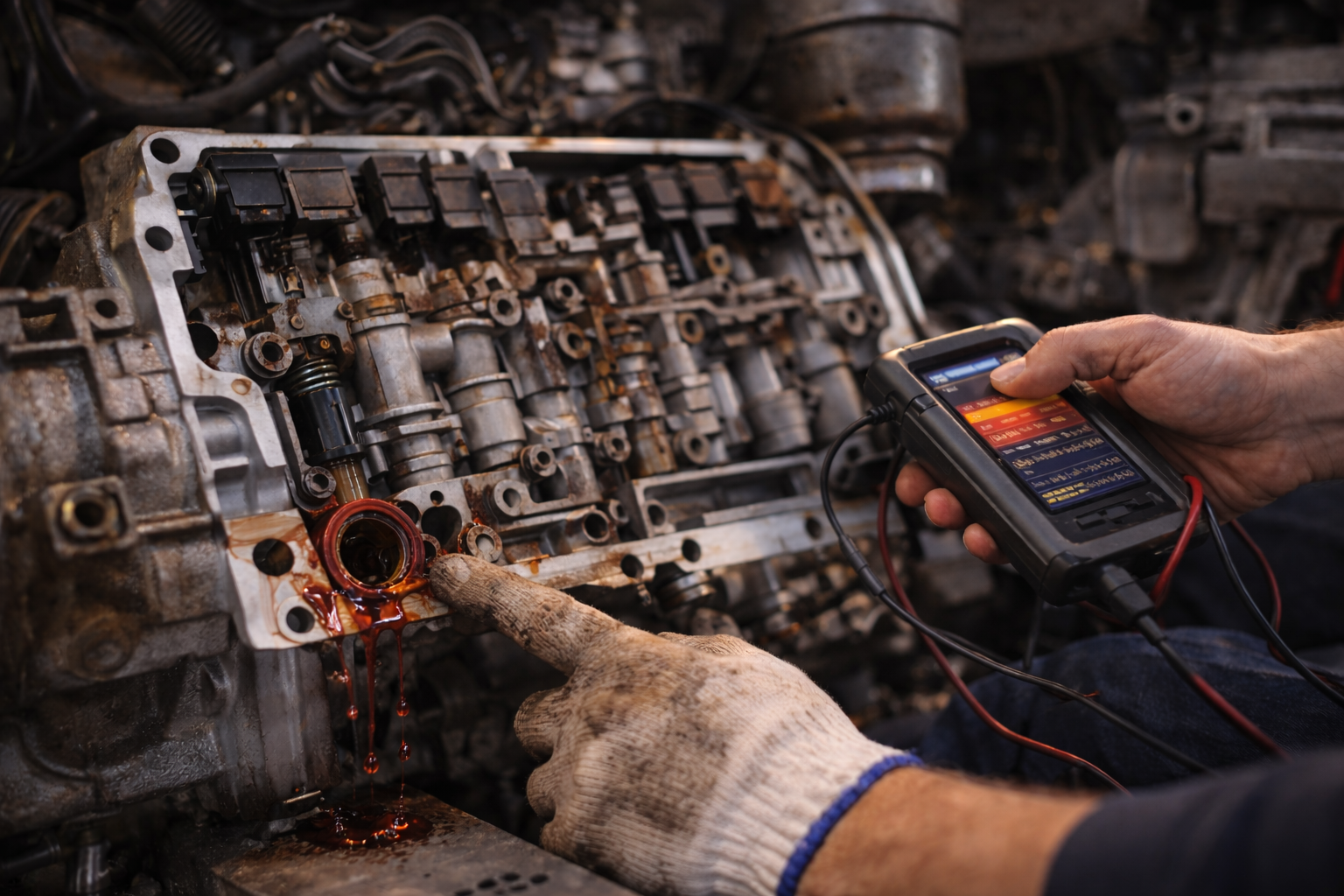
Transmission problems often start with subtle changes in how a vehicle feels. Slipping between gears, harsh or delayed shifts, or hesitation when shifting into drive or reverse are common warning signs that something isn’t operating correctly. Understanding these symptoms—and what causes them—can help you address issues early, before they lead to more serious damage.
At Snell Automotive, transmission diagnostics focus on identifying whether a problem is fluid-related, electronic, or mechanical, so repairs are based on evidence—not assumptions.
What Transmission Slipping Feels Like
Transmission slipping occurs when the engine revs without a corresponding increase in vehicle speed. Drivers may notice:
- RPMs rising unexpectedly
- Hesitation during acceleration
- Inconsistent gear changes
- A feeling that the vehicle “can’t decide” which gear to use
Slipping often worsens under load, such as during highway merging or uphill driving.
Hard or Jerky Shifts: What Causes Them
Hard shifting typically feels like a sudden jolt when the transmission changes gears. Common contributors include:
- Low or degraded transmission fluid
- Software or control module issues
- Worn internal components
- Hydraulic pressure irregularities
While occasional firmness can be normal, repeated harsh shifts usually indicate a developing problem.
Delayed Engagement Explained
Delayed engagement occurs when shifting into drive or reverse results in a pause before the vehicle moves. This can be caused by:
- Low fluid levels
- Internal seal wear
- Valve body issues
- Electronic control delays
Even brief delays should be evaluated, as they often signal early internal wear.
Why Transmission Problems Often Get Worse Over Time
Modern transmissions are designed to adapt as components wear. This can temporarily mask problems, allowing a vehicle to continue driving while internal damage progresses. Continued driving with slipping or delayed engagement can lead to:
- Increased heat buildup
- Accelerated clutch wear
- Costlier repairs later
Early diagnosis preserves more repair options.
Automatic, CVT, and Manual Transmissions: What’s Different
Symptoms vary by transmission type:
- Automatic transmissions commonly show slipping or harsh shifts
- CVTs may exhibit shuddering, hesitation, or inconsistent acceleration
- Manual transmissions often show grinding, clutch engagement issues, or difficulty shifting
Each type requires a different diagnostic approach, making professional evaluation important.
Why Transmission Fluid Matters So Much
Transmission fluid provides lubrication, cooling, and hydraulic pressure. When fluid is:
- Low
- Dirty
- Overheated
- Leaking
Shifting performance suffers quickly. Despite “lifetime fluid” claims, fluid condition still plays a major role in transmission longevity.
When Transmission Symptoms Become Urgent
You should schedule an inspection promptly if:
- Slipping occurs regularly
- Shifts become increasingly harsh
- Engagement delays worsen
- Warning lights appear
- A burning smell is noticed
These signs often indicate conditions that escalate under continued driving.
How Transmission Diagnostics Work
A professional transmission inspection may include:
- Fluid level and condition checks
- Electronic scan and live data analysis
- Road testing under load
- Evaluation of related engine or drivetrain systems
This process helps determine whether the issue can be repaired, serviced, or requires further action.
Why Early Inspection Matters for Memphis Drivers
Heat, stop-and-go traffic, and high-mileage daily driving common in the Memphis area accelerate transmission wear. Vehicles used for commuting and long trips are especially prone to fluid breakdown and pressure-related issues.