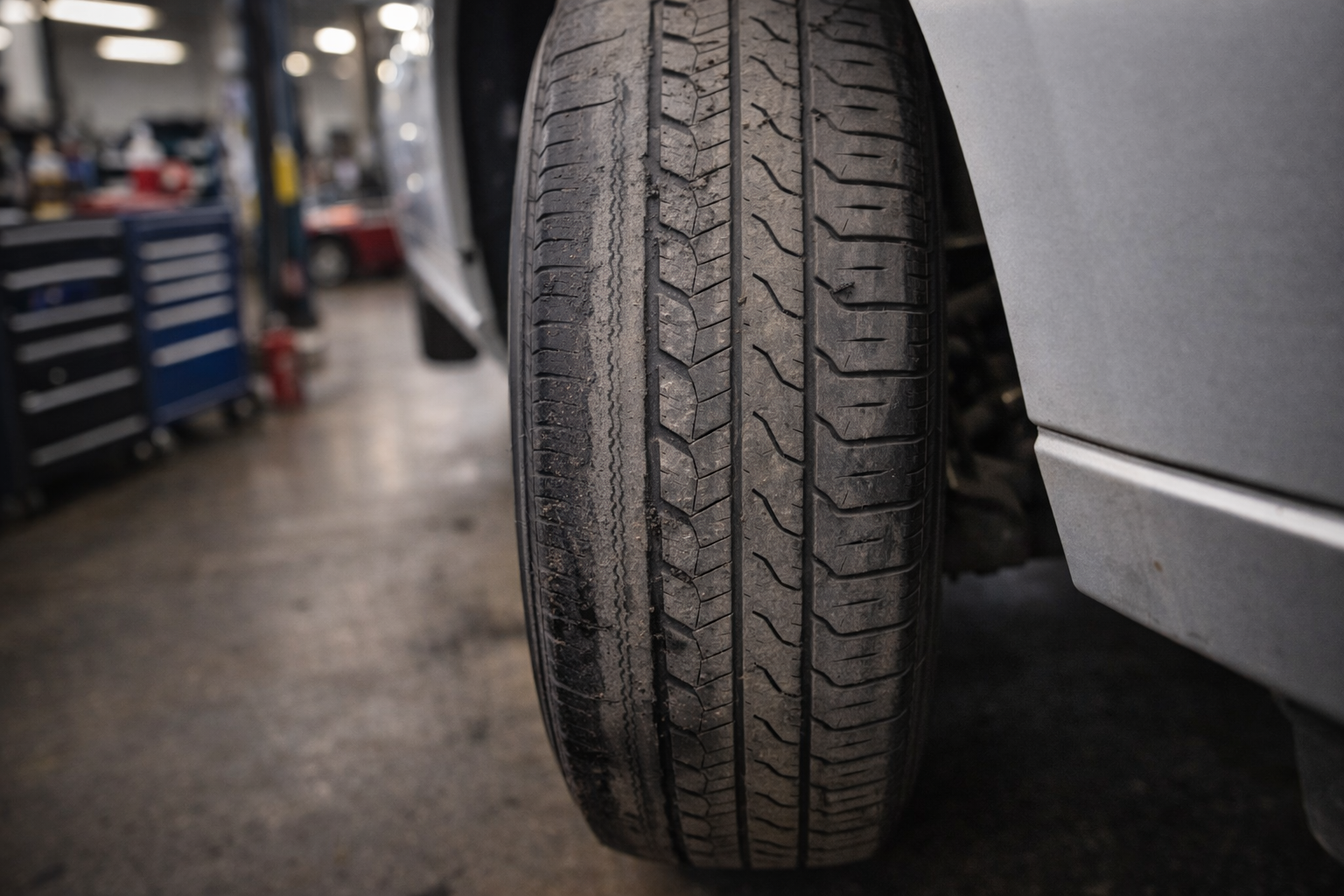
Tires don’t wear unevenly by accident. When tread wear looks abnormal, it’s often a sign that something deeper—like brakes, suspension, or steering—is no longer working as it should. Understanding tire wear patterns can help you catch problems early and avoid replacing tires prematurely.
Common Uneven Tire Wear Patterns and What They Mean
Edge Wear (Inside or Outside)
- Often caused by alignment issues
- Can also point to worn suspension components
- Frequently worsens if steering parts are loose
Cupping or Scalloping
- Typically linked to worn shocks or struts
- Indicates the tire is bouncing instead of staying planted
- Common on rough roads or high-mileage vehicles
Feathering
- Often caused by steering or alignment problems
- Tire tread feels smooth in one direction and sharp in the other
- Can reduce handling stability
Flat Spots or Rapid Wear
- May result from brake issues, such as sticking calipers
- Can also indicate uneven braking force side to side
How Brakes Contribute to Tire Wear
Brake problems don’t always show up as noise. Issues like:
- Sticking calipers
- Uneven pad pressure
- Dragging brakes
can cause one tire to wear faster than others. Left unchecked, this can also affect fuel economy and braking performance.
How Suspension Wear Affects Tires
Suspension components keep tires firmly planted on the road. When parts wear out:
- Tires lose consistent road contact
- Tread wears unevenly
- Handling and braking stability decrease
Replacing tires without addressing suspension wear often leads to the same problem returning.
Why Uneven Tire Wear Is a Safety Concern
Uneven tires can:
- Reduce traction
- Increase stopping distance
- Cause pulling or vibration
- Lead to blowouts in extreme cases
Tires are a warning system—ignoring what they’re telling you often leads to larger repairs.
Why This Is Common in Memphis Driving
Local driving conditions accelerate wear:
- Rough road surfaces and potholes
- Stop-and-go traffic
- Heat that breaks down suspension components
- High-mileage daily driving
These factors make regular inspections especially important.
How the Cause Is Diagnosed
At Snell Automotive, diagnosing uneven tire wear includes checking:
- Tire condition and wear patterns
- Brake operation side to side
- Suspension and steering components
- Alignment angles
This approach ensures the root cause is addressed—not just the symptom.
When to Have Your Vehicle Inspected
Schedule an inspection if:
- Tires are wearing unevenly
- The vehicle pulls or vibrates
- Braking feels inconsistent
- New tires wear faster than expected
Early diagnosis can save tires, improve safety, and reduce long-term costs.